A clenched jaw during deadlines, a squint while scrolling late at night, a habit of lifting the brows to look “more awake” on video calls. These tiny, repeated motions carve patterns into the face long before we call them wrinkles. Botox, when used with intention, is not just a cosmetic fix. It is a tool to retrain muscle behavior, protect skin from mechanical stress, and support a broader self-care routine that respects how you look and how you feel.
Rethinking Botox as Facial Wellness
Most people first hear about botox wrinkle softening injections as a quick way to smooth lines across the forehead. The truth is more interesting. Botox muscle relaxation therapy targets muscles responsible for dynamic creases, reduces their overactivity, and eases the tension that accelerates aging. Done well, it also prevents new lines from etching in. For many of my patients, botox facial stress relief is tangible. They describe fewer headaches from frowning, less squinting, and a general sense that their face is at rest instead of constantly “bracing.”
This is facial wellness: a plan that blends botox facial rejuvenation with skincare, sun protection, and small lifestyle shifts so your face looks more at ease, and you feel more at ease in it. The goal is not to freeze movement. It is to preserve expression with control and create facial harmony that aligns with how you live.
How Expression Lines Form and Why Muscles Matter
Expression lines, sometimes called dynamic lines, form where skin folds repeatedly: glabella (the “11s” between brows), horizontal forehead lines, and crow’s feet at the outer eyes. These begin as movement-dependent creases and, with time and collagen loss, can turn into fixed lines that remain even at rest. The force and frequency of the underlying muscle action drives this process.
Botox dynamic line correction addresses the cause. By reducing the strength of targeted muscles, it decreases the mechanical stress on skin. When repeated over months, it interrupts the cycle that deepens creases. Think of it as botox facial muscle training. The body adapts to reduced muscle activity, and some patients notice botox muscle memory effects in the best sense: they stop over-recruiting frown muscles and start using gentler, more balanced expressions. For a subset of people with heavy squinting or brow elevation habits, this becomes a habit breaking wrinkles strategy as much as a smoothing treatment.
The Aesthetic Philosophy: Softening, Not Erasing
I keep a simple principle: aim for botox facial softening and movement preservation rather than rigid stillness. Younger faces often need lower doses and wider spacing to maintain natural motion. More mature faces might benefit from slightly stronger dosing in areas where lines have already started to settle at rest. In both cases, the intent is expression preserving injections that support facial balance, not a uniform flattening of emotion.
Here’s the nuance. Strong “11s” contribute to a stern or tired look. Heavy crow’s feet can make the eyes look pinched. A hyperactive frontalis can exaggerate surprise lines. By prioritizing botox facial harmony planning, you can soften the signals that do not match how you feel, while keeping the ones that do. This is why an individualized botox aesthetic assessment matters more than a cookie-cutter approach.
A Consult That Feels Like Coaching, Not Sales
A thoughtful botox cosmetic consultation guide starts with listening. What bothers you? Where does your face feel tense? How do you express when you concentrate or when you smile? I map your answers against anatomy, then test muscles with simple cues: frown, raise the brows, close the eyes tightly, smile normally, bite gently. Video helps, especially to see natural expressions rather than staged ones.
I use facial mapping techniques to identify vectors of pull. The corrugators draw the brows inward, the procerus pulls them down, the frontalis lifts, and the orbicularis oculi contracts around the eyes. Some people have asymmetries that only appear during movement, such as a stronger left corrugator or a right brow that hikes higher. These observations drive botox placement strategy and precision dosing. The plan is not only about where to inject, but how to preserve desirable motion and correct imbalances.
Botox Cosmetic Injections Explained, Depth and Placement
All botox anti wrinkle injections share the same core: a purified neuromodulator that temporarily reduces muscle activity. The art lies in placement and depth. In the glabella, most targets sit deeper near the periosteum or deep muscle layer, so injections often go deeper and slightly medial to lateral, depending on anatomy. Forehead treatment stays more superficial, because the frontalis is a thin, vertically oriented elevator that sits close to the skin. Too deep here can lead to diffusion and heaviness. Around the eyes, the orbicularis oculi wraps circumferentially. Micro-deposits placed superficially along the lateral limb soften crow’s feet while avoiding weakness in cheek elevators.
Injector technique comparison matters. A heavier dilution with more injection points spreads effect thinly and evenly, useful for botox facial softening approach in larger areas like the forehead. A more concentrated dose in fewer points creates a tighter, more focal relaxation, better for deep glabellar furrows. Careful control of injection depth explained during consultation prevents common pitfalls, such as brow ptosis from oversuppressing frontalis in a patient who relies on it to keep lids open. This is where botox movement preservation becomes a safety feature as much as an aesthetic one.
Facial Zones Explained and Prioritized
Each zone has unique demands.
The glabella has strong depressors that create the 11s. Under-dosing here can leave a frustrated look intact. Over-dosing can drop the inner brow. A balanced plan often includes five to seven points, adjusted for asymmetry and brow shape.
The forehead is the only brow elevator. If the patient has a low brow or heavy lids, the dosing must be conservative and kept higher on the forehead, with a gentle gradient upward to avoid shutting down the only lift they have. For tall foreheads or strong horizontal lines, more points with smaller aliquots spread the effect without a sharp line of demarcation.
The crow’s feet zone responds beautifully to subtle rejuvenation. A few superficial points laterally create botox facial refinement by reducing squint lines and opening the eye shape slightly. If the lateral brow dips, tiny support points can tilt it subtly. Over-relaxation here can flatten the smile or exacerbate under-eye creasing in some faces, so nudging the outer eye rather than blanketing it works better.
Beyond these, specialized zones exist: bunny lines on the nose, downturned mouth corners driven by the depressor anguli oris, a pebbled chin from mentalis overactivity, platysmal bands in the neck. Each requires careful dosing to avoid functional interference. Small changes in these areas can deliver noticeable facial sculpting effects without adding volume.
Planning for Natural Aging Support
Botox does not rebuild collagen directly. It protects collagen by decreasing repetitive folding. Think of it as botox skin aging management. Over a year or two, people who maintain a steady botox wrinkle control treatment schedule see slower wrinkle progression. The lines that used to rebound right after frowning take longer to return, and some never fully come back. This is botox wrinkle progression control at work.
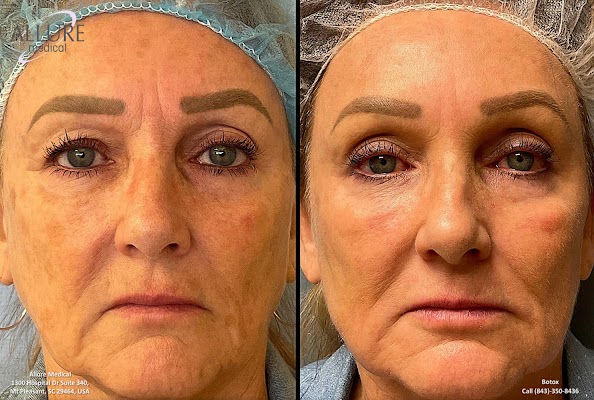
For those worried about looking “done,” consider botox facial microdosing. Microdoses placed with high muscle targeting accuracy reduce activity enough to soften without immobilizing. This approach makes sense for first timers, on-camera professionals who need expressive faces, and athletes who sweat heavily and want conservative, frequent touch-ups rather than big swings.
The Protocol: From First Session to Maintenance
On the first visit, we start with minimal effective dosing, observe how your face responds over two weeks, then refine. Most people feel the onset within 3 to 5 days, with full effect by day 10 to 14. If you need adjustment, it is usually small. Once your dosing and placement stabilize, intervals often range from 10 to 16 weeks. Some maintain nearly full effect at four months, others metabolize faster and prefer 8 to 10 weeks. These differences come from muscle mass, baseline activity, metabolism, and lifestyle.
A practical botox facial relaxation protocol includes pre-care and aftercare that fold into daily habits. Avoid heavy workouts, saunas, or massages across treated areas for the rest of the day to reduce spread. Keep your head upright for a few hours. Gentle movement of treated muscles in the first hour may improve uptake, although data is mixed. The more important habit is what follows: use SPF 30 to 50 daily, maintain retinoids if your skin tolerates them, and hydrate appropriately. Botox non invasive rejuvenation works best when you protect your investment.
Safety, Dosing Precision, and Informed Decisions
Botox cosmetic safety overview is straightforward when the injector respects anatomy, dosing limits, and contraindications. Adverse effects often tie back to diffusion into unintended muscles. The risk falls when you anchor placement with good facial mapping techniques and a precision dosing strategy tailored to the patient. Side effects may include temporary bruising, a mild headache, and in rare cases, brow or lid heaviness that lasts a few weeks. Choosing a clinician who can explain the injection plan, show you what they are targeting, and describe how they will avoid key pitfalls builds trust and improves outcomes.
Not everyone is an ideal candidate. Pregnancy and breastfeeding are typical exclusions. Certain neuromuscular conditions require caution or avoidance. Heavy eyelid hooding may point toward skin laxity or fat pad changes that botox alone cannot fix. In such cases, we frame botox cosmetic decision making honestly and may shift toward skin tightening, lasers, or surgical options if appropriate. Botox is powerful within its lane, but it does not replace volume loss correction or skin resurfacing when those are the primary issues.
Real-World Examples and Trade-Offs
Consider a 34-year-old designer with pronounced “11s” and a habit of frowning when reading. We began with 14 to 18 units across the glabella complex and 6 units laterally around each eye. Two weeks later, her frown softened, headaches eased, and her eye area looked brighter without stillness. We added a gentle 6 to 8 units across the upper forehead in a high, scattered pattern. She maintained at 12-week intervals, with a small touch-up on the left corrugator that remained stronger.
A 46-year-old teacher presented with a flat-looking upper face from prior aggressive dosing elsewhere. She disliked how her brows sat low and her smile felt “stuck.” We reversed the approach. We allowed the forehead to recover by skipping it for a cycle, then used lower glabellar dosing while adding microdoses laterally to support a slight brow lift. We restored movement preservation and a more open gaze. She accepted a few faint lines in exchange for expressiveness, a worthwhile trade-off for her daily work.
A 58-year-old runner with etched forehead lines and new neck bands wanted subtle improvement without changing how she looks in race photos. We focused on botox aging prevention injections with conservative forehead dosing, heavier glabellar support to reduce reflexive frowning late in runs, and minimal crow’s feet softening. For the neck, we placed light units along two platysmal bands. The outcome smoothed high-motion zones while preserving a natural, athletic expression.
These cases reflect botox cosmetic customization rather than a formula. They also show why botox placement strategy and movement preservation often outperform blanket dosing, especially when a patient values nuance over maximal smoothing.
Longevity and the Lifestyle Link
Botox treatment longevity factors include muscle bulk, dose, frequency, product handling, and how your body metabolizes the protein. Lifestyle impact on results is real. High-intensity training seems to shorten duration for some, possibly through increased circulation and metabolism, though data is not definitive. Heat exposure, frequent saunas, and intense facial massage may also nudge duration down. On the flipside, diligent sun protection, consistent hydration, and avoiding constant squinting or brow lifting can stretch the benefit.
There is also a behavioral effect. When botox reduces the urge to frown, you stop practicing the wrinkle. This muscle activity reduction can persist even as the product wears off, so your baseline softens. Patients who lean into the process with mindful facial habits often need less product over time or maintain longer intervals. That is botox wrinkle rebound prevention as a lived experience rather than a promise on paper.
Microdosing, Baby Botox, and When Less Is More
Botox subtle rejuvenation injections, sometimes labeled “baby Botox,” use small aliquots placed with high precision. The intent is refinement over erasure. It can be ideal for first-time users, actors, and anyone wary of change but curious about botox natural aging support. I often start microdosing in the forehead and outer eyes, then address the glabella gently, keeping enough strength to avoid droop while mitigating the scowl. As confidence grows, we adjust. For many faces, this gradual path aligns with a wellness mindset, easing into results and preserving identity.
Balancing the Upper, Mid, and Lower Face
The upper face commands attention, but the lower face can betray tension too. A tight mentalis creates an orange peel chin. Overactive depressors pull the mouth corners down, reading as fatigue or irritation. Strategic botox expression line treatment in these zones can rebalance the smile and set the lips back into a neutral posture without changing lip volume. In bruxism or jaw tension, masseter treatment offers botox facial tension relief. While primarily therapeutic, it often brings a side benefit of gentle jawline refinement due to muscle volume reduction. The trade-off is functional. If you lift heavy weights or chew gum frequently, you may notice mild fatigue at first. Dosing must respect your lifestyle.
Patient Education That Builds Confidence
The best botox patient education resource is conversation informed by anatomy and realistic outcomes. I sketch the muscles, mark likely points, and show how botox facial zones explained relate to the lines someone sees in the mirror. People appreciate understanding why a higher forehead needs a different approach than a low brow, or why a strong corrugator can make the mid-brow dip if the frontalis is suppressed too much. This clarity also reduces anxiety about the first two weeks, when minor asymmetries can appear as the effect sets in, then even out by day 10 to 14.
I also talk candidly about costs and timelines. You will likely return three to four times a year, and small tweaks may be needed early on. If you are on a budget, I help prioritize. The glabella often gives the most visible and mood-elevating return on investment by removing the perpetual frown. The outer eyes come second, then the forehead. That sequence preserves lift and minimizes risk.
Beyond Aesthetics: Headaches, TMJ, and Comfort
Even when the primary goal is cosmetic, the comfort benefits matter. Many patients report fewer tension headaches once the glabella and forehead relax. Those who grind their teeth or clench their jaw often find that masseter treatment reduces morning soreness and tooth wear. While these uses can cross into therapeutic territory and may require medical evaluation, they illustrate how botox facial wellness is not a vanity project. It can be part of feeling physically better and moving through the day with less strain.
The Role of Skin Care and Sun in Long-Term Outcomes
No neuromodulator can outpace sun damage. Daily SPF and retinoids where tolerated, plus antioxidants like vitamin C in the morning, make a measurable difference. They increase collagen production and reduce pigment changes that can make lines look deeper. Combine that with botox wrinkle prevention strategy to slow mechanical folding, and you get amplified benefits. For deeper lines that remain at rest, pairing botox with resurfacing, such as fractional lasers or microneedling with radiofrequency, often yields smoother results than either alone. Sequence matters. Calibrate relaxation first, then resurface once muscle pull has dialed down and healing can proceed without constant folding of the treated skin.
What Success Looks Like
Good botox cosmetic outcomes read as rested, not altered. A colleague asks if you slept well. A friend says your eyes look bright. You notice that makeup no longer settles into creases by midday. Your sunglasses become more comfortable because you are not squinting against glare. The mirror becomes less of a check for flaws and more of a quick glance on the way out the door. That is botox facial wellness realized: aging gracefully with controlled movement, softened tension, and skin protected from the unhelpful parts of muscular habit.
Choosing the Right Injector
Credentials matter, but so does taste. Review a practitioner’s before and afters for consistency and restraint. During a consultation, notice whether they watch your expressions or just count units. Ask how they plan to preserve your best movements while addressing the lines that bother you. A strong injector can discuss botox muscle targeting accuracy, explain why a point is deep or superficial, and articulate a long term outcome planning mindset rather than a one-off fix.
A Practical Shortlist for Patients
- Clarify your top two priorities and any expressions you want to preserve before the appointment. Ask your injector to show the facial mapping and placement strategy on your face. Start conservatively, revisit at two weeks, and adjust with data rather than guesses. Protect with SPF daily and avoid high heat, intense facial massage, and strenuous exercise on day one. Track your duration. Book your next session a week before your typical wear-off to sustain smoothness.
When to Wait, Pause, or Switch Strategies
If you have a major event and are a first-timer, schedule at least a month before to allow adjustments. If you are ill, postponing is simple prudence. If a brow tends to drop, give extra space to the forehead or accept that the frontalis will need only light touch. If you love extreme lifting of the brows when you emote on stage or on camera, lean into microdosing and targeted glabellar support rather than broad forehead treatment. Your life should dictate the plan, not the other way around.
Integrating Mindfulness Into the Process
One of the overlooked benefits of botox facial wellness is awareness. Patients become conscious of their micro-expressions. They catch the frown before best botox clinics SC it sets. A brief pause before reacting, a relaxed breath, fewer clenched moments during hard tasks. This is not a lecture about stress management. It is a simple note that the face can guide the nervous system as much as the reverse. When your resting face looks calm, you often feel a bit calmer. The feedback loop supports both the aesthetic and the self-care aspects of the plan.
The Bottom Line
Botox, used thoughtfully, is more than wrinkle relaxation. It is a planned reduction of unhelpful muscle activity, a strategy for slowing mechanical aging, and a way to align your outward signals with your internal state. With careful assessment, precise dosing, and respect for expression, you can achieve botox cosmetic refinement that looks like you on your best day. Pair it with solid skin care, sensible sun habits, and small lifestyle adjustments, and you have a durable botox facial wellness approach that stands up to real life.
This is what integrating aesthetics and self-care looks like in practice. A steady, measured plan. Natural movement, protected skin, and a face that reflects the ease you are working to cultivate.